
The Candlesticks That Didn't Make It
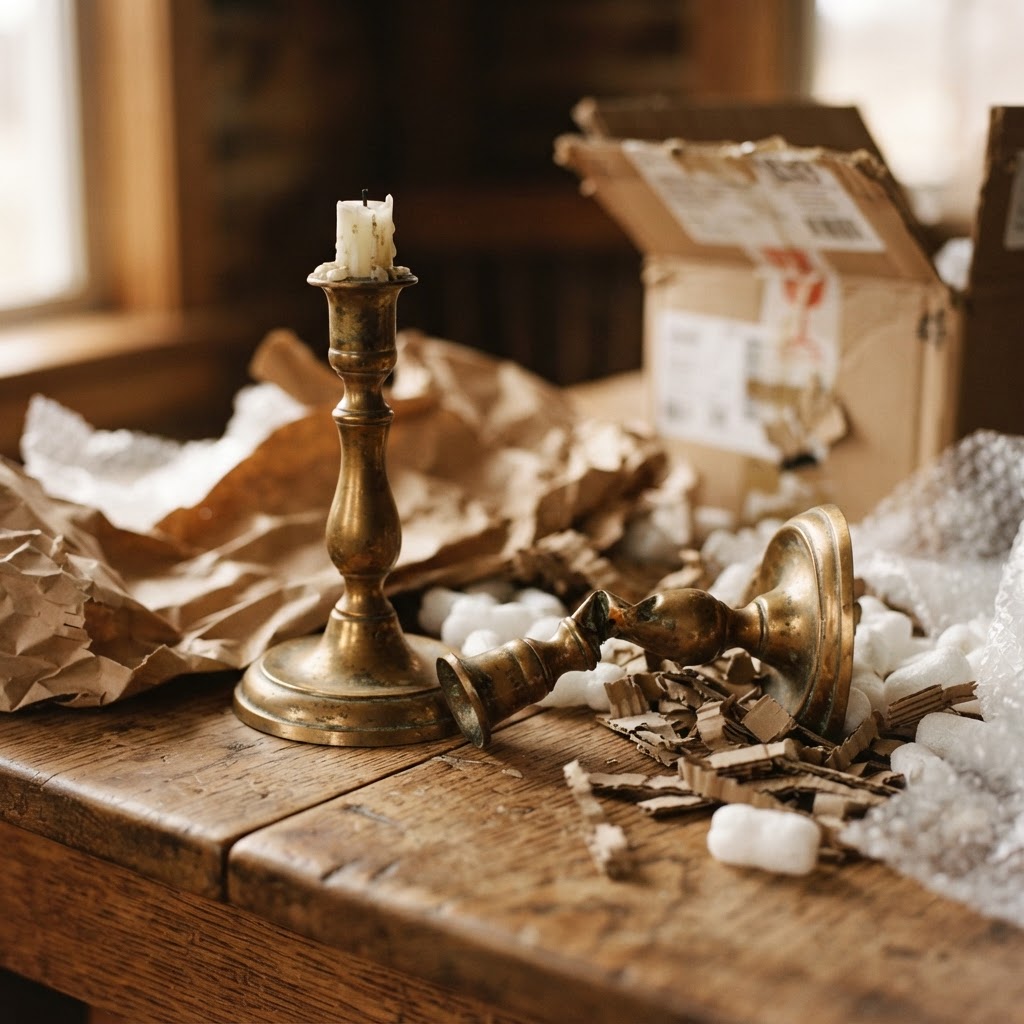
My great-grandmother brought a pair of brass Shabbat candlesticks out of Vilnius in 1903. They were the only thing she carried that wasn't a child. They were tall, maybe eight inches, with a worn patina from a hundred years of Friday nights. She lit them every week of her life. Her daughter lit them. My mother lit them. When my family emigrated from South Africa to the United States in 1995, we shipped our belongings in a container. The candlesticks were wrapped in bubble wrap, then newspaper, then a wool blanket, then placed in a wooden crate my father built specifically for them. He screwed the crate shut. The container arrived. Most of it arrived. The crate was there, but it had been crushed — you could see the marks where something heavy had fallen on it from a height. The wood had splintered inward. The candlesticks inside were flattened. Brass doesn't shatter, but it bends, and these had been bent past recognition. One was folded nearly in half. The other was twisted like a corkscrew. We took them to a metalworker. He said he could try to reshape them, but they'd never be the same — the patina would be lost, the seams would show, they'd be fragile. My mother decided not to. She said they'd been through enough. She bought new candlesticks. They're nice. They're not the same. What I miss is the weight of them in my hands when I was allowed to set them on the table as a child. The way the brass caught the candlelight. The smell of the metal, warm from the flames. The knowledge that my great-grandmother had held these same candlesticks on a Friday night in Lithuania, a hundred years before me. Those candlesticks survived a pogrom, a voyage, a century. They didn't survive a shipping container. I try not to find that too on-the-nose, but it's hard not to. Some things, it turns out, can only take so much.
Please sign in to leave a comment
No tributes yet
Be the first to pay your respects
Pay your respects
Sign in to leave a tribute

